Nudism and laws in Italy: which limits to respect and what sanctions you risk
Published on 16 September 2026
Although it is an increasingly accepted practice, nudism and naturism in Italy still face a strict legal framework. Simple nudity can be punished, if the beach is not authorized and under certain conditions, as the administrative offense of acts contrary to public decency. If, however, sexual behavior is also engaged in, it falls under obscene acts in a public place.
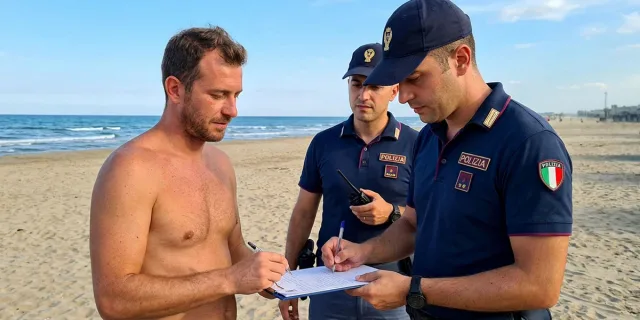
Nudism and naturism represent two lifestyles that unite an increasing number of enthusiasts. Yet, although these practices are widely accepted today, from a legal point of view the Italian situation is still decidedly complex. But what limits must be respected, and above all what sanctions do you risk, when you decide to undress in open and publicly accessible places? Two distinct scenarios provided by law must be taken into consideration, both recently partially decriminalized.
Acts contrary to public decency
The first situation to pay attention to is the choice to practice nudism in an inappropriate or not formally authorized place. Pursuant to Article 726 of the Criminal Code, you risk committing acts contrary to public decency: an offense recently decriminalized into a simple administrative violation. Nudity can constitute a violation when, due to the context and manner in which it is practiced, it turns out to be contrary to public decency in a public place or one open to the public. However, the context must be inappropriate: the individual must display their nudity outside specially authorized areas or, furthermore, in the absence of a consolidated nudist or naturist custom of the place. For the violation to occur, however, it is essential that certain conditions are met:
- potential visibility, i.e. the possibility that non-consenting passersby may witness the nudity. It is not actually necessary for strangers to be present; it is more than sufficient that they could potentially be;
- the absence of sexual connotations: obscene acts, in fact, differ from acts contrary to public decency because they offend the realm of sexual modesty.
Following Ruling 95/2022 of the Constitutional Court, previous fines ranging from 5,000 to 10,000 euros were declared unconstitutional. Today, the administrative fine ranges from a minimum of 51 euros to a maximum of 309 euros.
Obscene acts in a public place
A very different matter is that of obscene acts in a public place, governed by Article 527 of the Criminal Code. This is not about simple decorum, as in the case of displaying one's nudity, but rather conduct that offends intimate modesty and sexual decency.
In other words, it falls under this category when exhibitions or sexual behaviors are performed in a public or publicly accessible place. In this case as well, the offense has undergone partial decriminalization, so a distinction must be made between:
- administrative violation, if the act is performed in a public place, or one open or exposed to the public. Fines range from 5,000 to 30,000 euros;
- criminal offense, if the act is committed inside or in the immediate vicinity of places habitually frequented by minors and this creates the danger of them witnessing it. In this case, the penalty is imprisonment from 4 months to 4 years and 6 months.
Can you receive fines on authorized beaches?
One of the most widespread fears among those approaching nudism and naturism concerns the possibility of being fined on authorized beaches. Regarding acts contrary to public decency, the violation does not exist in areas formally designated for nudity:
- exposing the body is not only allowed, but perfectly legal;
- the fact that the beach is designated for naturism or nudism normally renders nudity lawful, precisely in light of the context and local custom.
However, the matter is different for obscene acts in a public place: they can still be punishable on nudist and naturist beaches, because these areas exist for living in nudity, not for engaging in sexual acts.
When do you risk fines on unauthorized beaches?
If you practice nudism on a standard public beach, or near a beach resort, the risk of being fined for acts contrary to public decency cannot be ruled out. Still, case law has recently intervened by defining certain application boundaries.
In general, violations tend to be ruled out when nudity is practiced in secluded, isolated, and hard-to-access places, where there is no concrete possibility of the naked body being seen by strangers. Furthermore, with Ruling 3557/2000, the Court of Cassation established that naturism does not constitute an offense in places where this practice has become a consolidated, well-known, and tolerated custom within the community.
Finally, the risks for obscene acts in a public place always remain valid whenever sexual conduct is engaged in in public.