Families and naturist spaces: how to approach them
Published on 28 August 2026
How to assess the setting, language and services without relying on simplistic labels, what matters most and what families should check
Simply defining a place as "family-friendly" with an icon is not enough. In fact, how welcoming a location really is depends on a combination of a safe environment, properly enforced rules, practical services, respectful language and parents' freedom to assess their own children's needs. A place may be popular with families and still have difficult access, deep water or no shade; it may have a playground while handling privacy and photography poorly.
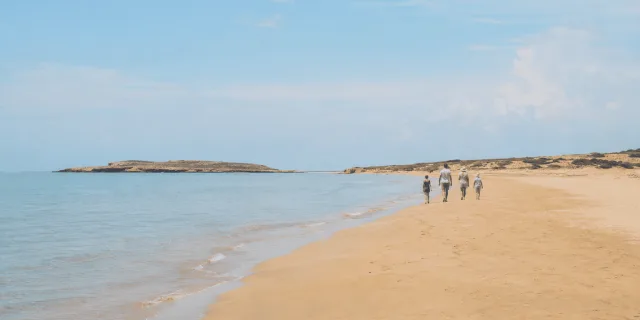
Before travelling, it is therefore advisable to ask which age groups usually attend the facility, whether there are dedicated activities, water supervision, restrictions for pools and saunas, changing areas, toilets and the possibility of preparing or buying food. On a public beach, the key factors instead become the route needed to reach it, the seabed and water depth, wind conditions, mobile phone coverage and access to drinking water. The absence of clothing does not remove the normal considerations that any family makes when planning a day outdoors.
INF-FNI guidelines call for maintaining a safe environment, preventing harassment and public sexual behaviour, and obtaining consent before taking photographs. For families, these are not abstract principles: they mean being able to rely on adults and managers who intervene when boundaries are not respected. When minors are present, the safest rule for photography is simple: do not include them in the picture, even in the background.
Protecting children
Every family chooses its own language, but it may be useful to explain beforehand that the place follows different rules, that nobody should stare at or comment on another person's body, and that it is always possible to ask to leave. Children should not be forced to undress simply to meet adults' expectations; the facility's policy should be checked in advance and a compatible setting chosen, because a natural attitude does not come from silence, but from age-appropriate explanations and from allowing children to express discomfort.
In terms of protection, it is also useful to remember that the WHO stresses that sunburn during childhood increases the risk of skin cancer later in life and recommends shade, clothing, a hat and sun protection whenever the UV index is 3 or above. Water and sand reflect UV radiation, so a day at a naturist beach requires breaks and shaded areas, not just sunscreen. A family plan should include a shorter stay than the maximum originally imagined, snacks, plenty of water and an alternative plan if the heat or sea conditions change. Put simply, spending an entire day on a remote public beach with virtually nothing around, including during the hottest hours, may not be a good idea when travelling with children.
If the place is unfamiliar, reviews become especially important because they may describe access, facilities, water depth, shade, staff behaviour, photography rules and the date of the visit. These details are what allow a family to make an informed decision, and they are also the information worth mentioning when writing a review, so that it can help someone else.